

Donning Drills
Sledgehammers, SCBAs, BEFO, bunkers—and more firefighting terms you didn’t know you needed
In case you missed it: Buke and Gase is winding down as an active project. We hope you can join us for our New York Farewell.
Wednesday April 15: Brooklyn, New York @ Public Records — TICKETS
Thursday April 16: Brooklyn, New York @ Public Records — WAIT LIST (SOLD OUT)
Saturday April 25: Hudson, New York @ The Half Moon (SOLD OUT)
My last post is probably the best explanation for why the project (and my firefighting journey) may be easing up in the near future. Read it here.
Back to Firefighting: Donning Drills
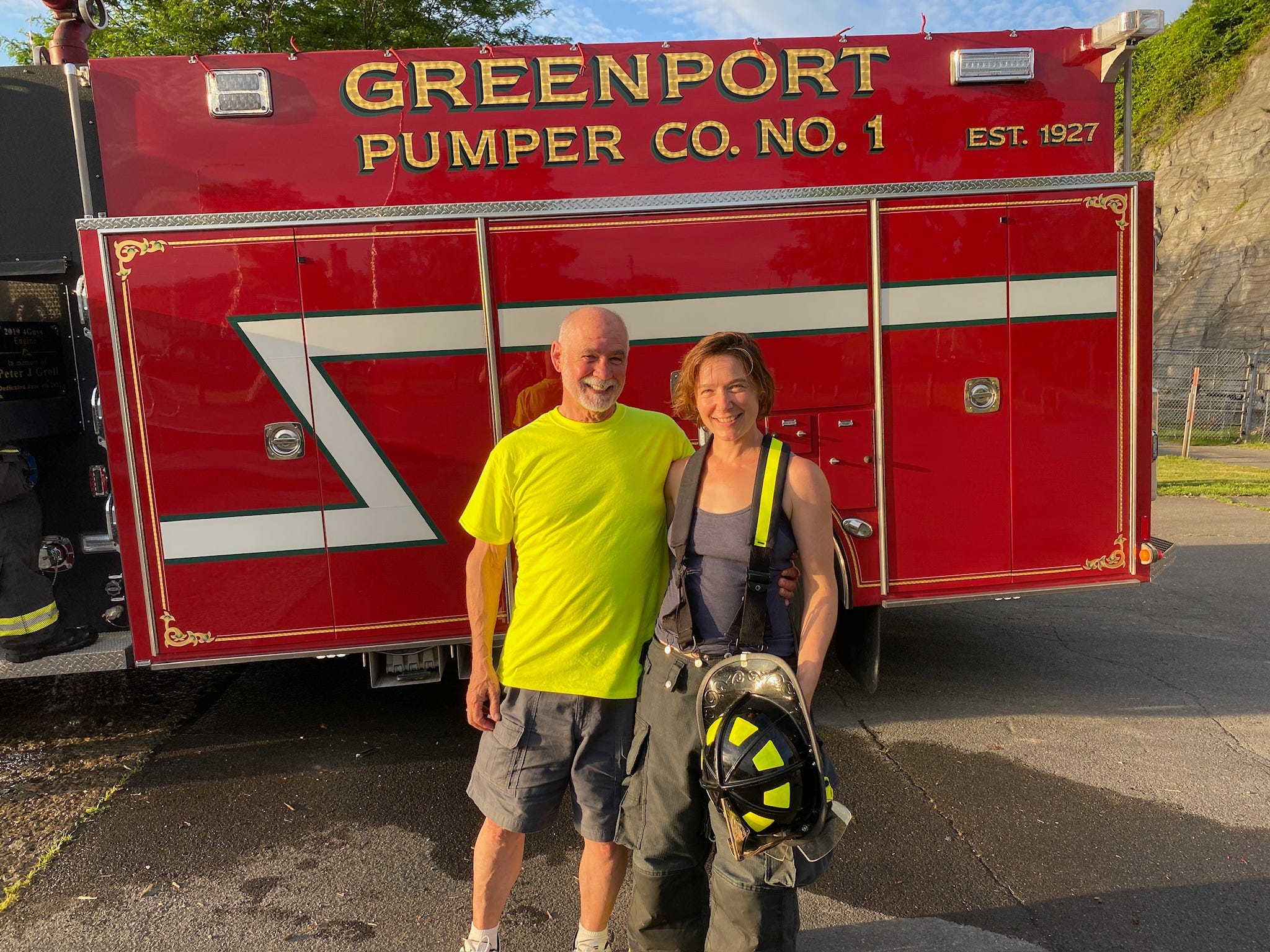
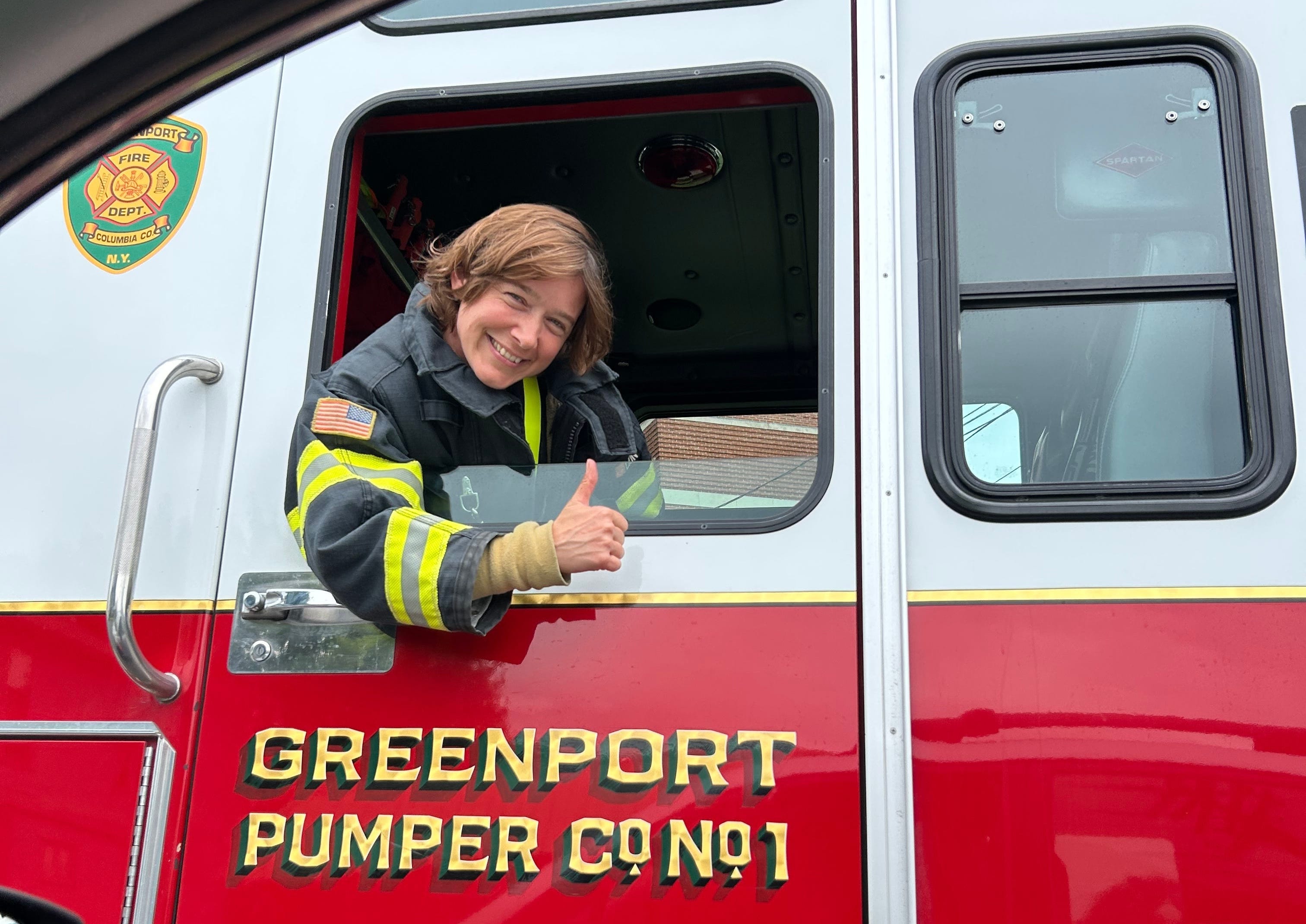
As I’d mentioned in my previous post, last fall I enrolled in an Interior Firefighting Operations (IFO) course. It met for three hours, two nights a week last autumn.
Much like in Basic Exterior Firefighting Operations (BEFO), we trained in full turnout gear—but this time with the addition of a face mask and a 25-pound Self-Contained Breathing Apparatus (SCBA). Fun fact: normal conversation in the mask is hard. Understanding the muffled yelps of emergency directions from your teammate? Nearly impossible.
Along with 20 others, I trained in hands-on skills like tactical ventilation, fire attack, structural search and rescue, hose advancement, and vehicle fire suppression.
We also revisited fundamentals—Firefighter Safety, Health and Wellness (including Mental wellness, which for many reasons is SO important), Forcible Entry, and Incident Scene Operations (who does what/where/when)—while expanding into communication, teamwork, and more advanced fire suppression techniques.
There was a strong emphasis on teamwork, but also on individual grit. Every night we hauled in our turnout gear, SCBA, face mask, and a tool (I brought an axe most nights). It almost felt like being on tour again—just less efficient and, sadly, no afterparty.
A major component was the highly anticipated Donning Drills: suiting up in your turnout gear as fast as possible—bunkers, boots, hood, coat, mask, SCBA, helmet, gloves—with air flowing before raising your hands for time. Our class’s goal: under two minutes.
This video from Reddit is an example of a particularly well-timed Donning Drill.
I took some major tips from this video in how I set up my gear prior to the drill and was able to get it in just under a minute most days, possibly (totally) helped by my gear being several sizes too big. Unfortunately, my team…did not achieve this kind of speed and efficiency for the first four weeks (gah!). Something always snagged, stuck, or someone took waaaaaay too long. Not gonna name names tho, we all did our best.
There were many other kinds of drills, and all were intentionally stressful. One standout was Search and Rescue: mask on, air flowing, you’re told to get low and follow a hose line into a pitch-dark maze of walls, furniture, stairs, and rooms—essentially a disorienting model house. You grope your way through, hoping your training kicks in before your brain decides to panic.
All the while, a training instructor is yelling “DID YOU CHECK EVERYWHERE?!” and you’re like “I think I did??!” but then you double back and discover you missed a baby mannequin on the couch.
(SMH… gotta do better!)
Enter the TOAC: Task-Oriented Air Consumption test
TOAC was the big one—a timed series of tasks performed while managing a limited air supply.1 Rumors circulated in class that it was THE hardest part of the course, and we were all quite nervous about it.
I unpacked the acronym in the headline up there but let me break down what it entails. Each station is a simulation of the tasks you would likely perform when you’ve arrived at a scene, from hose and tool preparation, to overhaul once all the obvious flames have been extinguished. They are completed in an order that coincides with prioritized tasks at a typical fire scene, and spread over enough ground that you have to walk quite a bit to get to each test station, with the benefit that you can use that walking time to catch your breath and prepare for the next exertion. The goal of the TOAC is to see how many tasks you can successfully complete (and repeat, if possible) before your air runs out. We’re each allowed 30 minutes of air. Your plain-clothes partner keeps track of your progress and helps monitor your air consumption.
The Stations:
#1 - Hose Carry: Carry a 70lb hose over your shoulder up and down three flights of stairs (bringing hose to an appropriate location on scene)
#2a & #2b - Hose Stretch & Pull: Drag a 70lb hose line along the ground from over your shoulder for 70ft; then, pull a looped hose line as though you’re paying it2 from the truck (setting up hose at the scene)
#3 - Tool Lift & Carry: remove two 30-pound saws from a chest-height cabinet (the firetruck) and carry 70ft (preparations for Forcible Entry), then replace in the cabinet
#4 - Ladder Raise: raise and lower a 24-foot ladder with smooth, controlled and correct hand positioning (preparations for roof/second floor access)
#5 - Forcible Entry: simulated by slamming an inflated truck tire laying on its side at waist height with a 10lb sledgehammer 10 times
#6 - Search: simulated by crawling through a dark maze and performing correct wall/floor search tactics (feeling for windows and patients)
#7 - Rescue: dragging a 165-pound mannequin 70 ft
#8 - Overhaul: Overhead push/pull with a pike pole (a 6-to-10ft-long tool with a hook and piercing point at the end.) This simulated what we do after we put out a fire, which is rip out drywall or ceilings to make sure there aren’t any hidden smoldering fires.
Rinse and Repeat.
My experience of this test was complicated by the fact that, just four days earlier, I’d learned I was pregnant. Suddenly, the usual stress of overheating in my bunkers—my personal sauna—was compounded by the worry of “cooking my baby.” I’d heard that one doesn’t want to do that… So I was on high alert for dangers.
With my new understanding of what was happening inside my body, I roughed it through all the tasks once (thereby passing the test) and made the decision to throw in the towel, having used a little less than half of my air within less than 17 minutes. It was exhausting, mentally and physically, but I think that, had I not known I was pregnant, I would’ve pushed myself to complete the stations one more time.
I am 45. Having a baby already felt like a miracle—although I’d rather not call it that, because it implies religious leanings which I don’t have. It’s more like a reboot! A second chance at life! I mean, I was in denial that it was even possible—to the point where, a year earlier, I’d started hosting a Menopause-Curious Meeting for those anticipating or currently experiencing it. I felt incredibly lucky, and didn’t want to fuck it up one iota.
Desperate for reassurance, I asked the only EMT in class I felt I could talk to (hi Jentl!) if he thought being pregnant was something I should worry about during this type of training. His eyes and smile grew, and I feared he’d blow my cover during class—but his advice was exactly what I needed: “If it’s something you’re worried about, listen to yourself. I’m sure it’s going to be all right.”
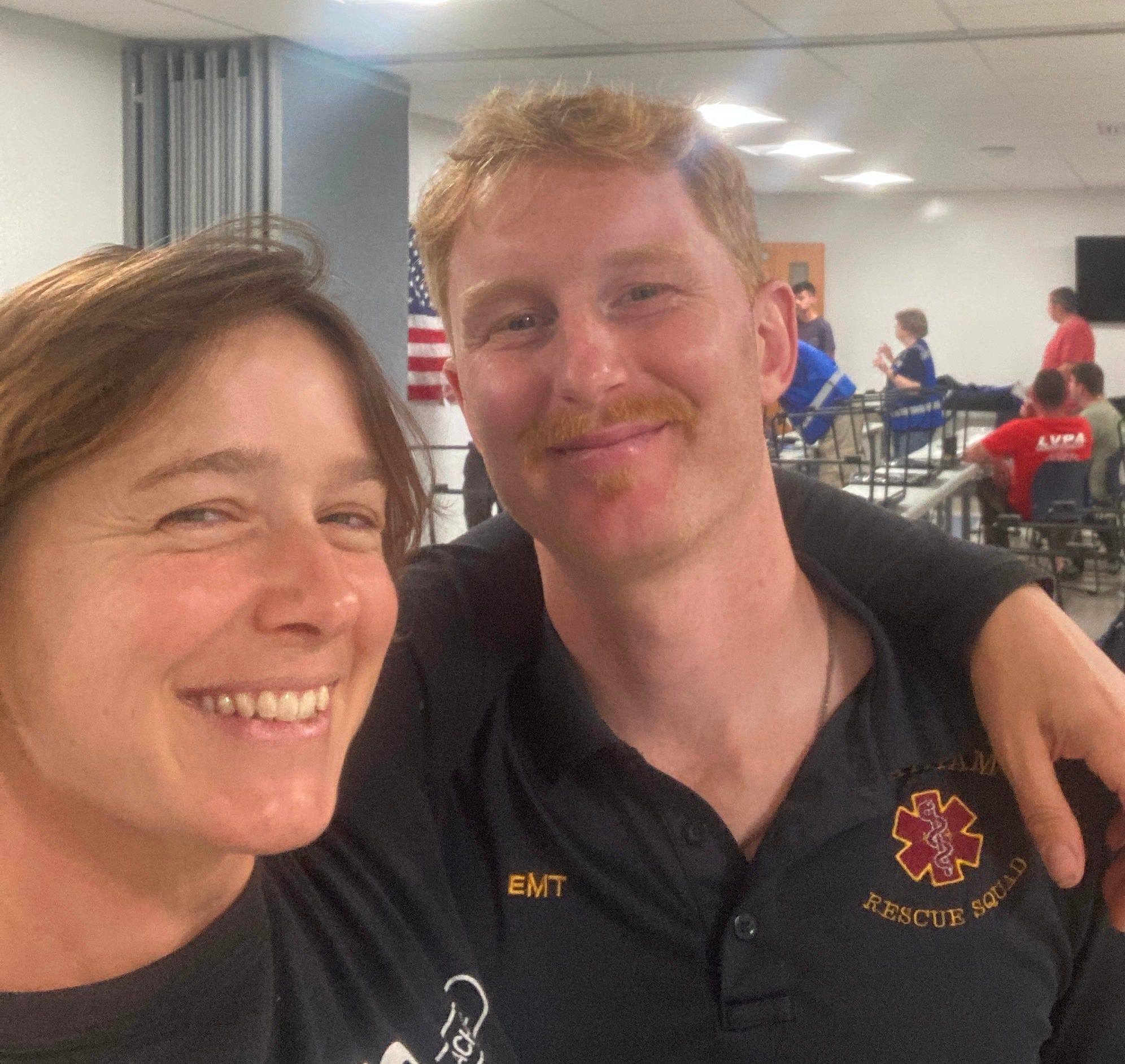
So, as you already know, I reluctantly made the decision to step away from the course at the behest of my caring friends and Sig-O3 and, yes, my own internal voice. (Good advice Jentl.)
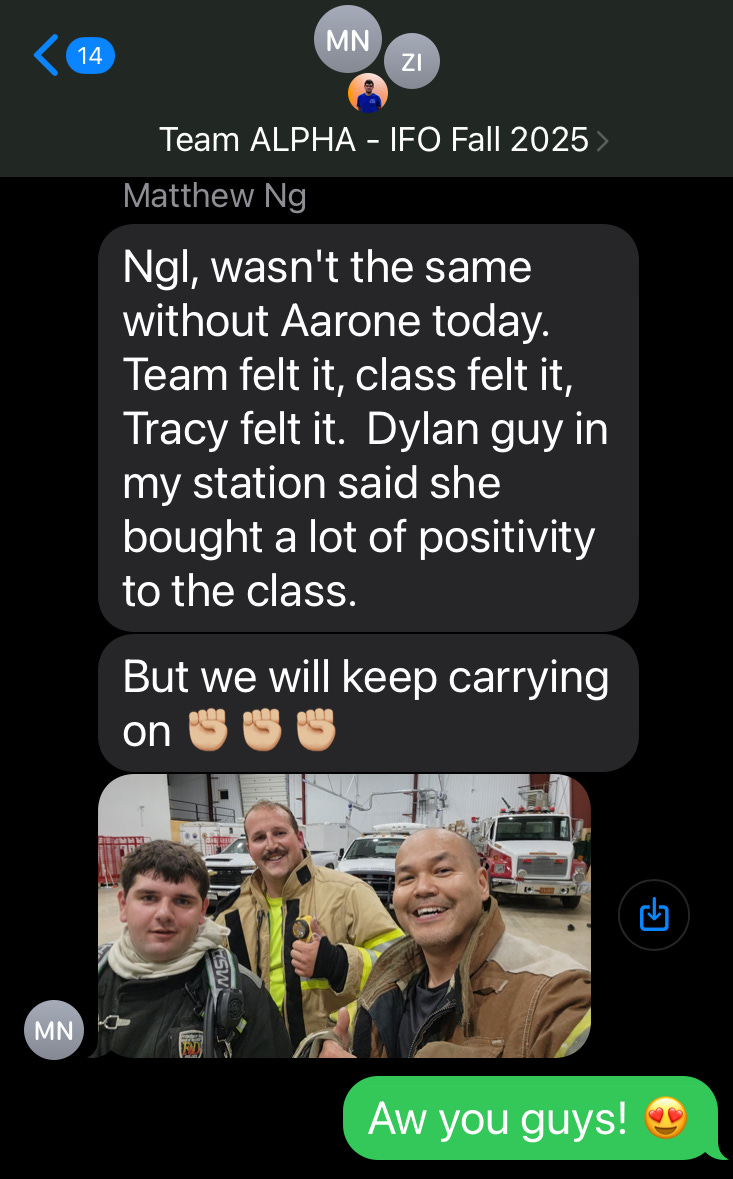
I was genuinely sad to leave. I felt like I was letting down my teammates and my department who, I’ll point out, had just outfitted me with $5,000 worth of brand-new turnout gear. But everyone—from my Department Chief to fellow firefighters and instructors—has been incredibly supportive.
Even better, I’ve met some really great folks along the way—far from my preconceived notion of the “type of person” who does this work. Turns out they are generous, brave, funny humans.
The best way to support my life as a creative and community worker is by subscribing to Buke & Gase’s Scholars Alliance on Bandcamp, or pledging to support this newsletter.
Arone Dyer, Firefighter
Below are easy links to the earlier installments of my journey into firefighting.
Pt 1: from Freak to Firefighter: Training for the volunteer firefighting squad in a tiny upstate New York town
Pt 2: Paperwork! Gear! Hound Dog Heroes! Initiation (hazing?) in the volunteer fire fighter style
Pt 3: Fast Forward FireFighter! Learning to fight fires without losing my politics
Pt 4: Interior Complex: Eight weeks of interior fire fighting operations classes
Pt 5: (Hu)ManPower! ...and the search for community engagement: Finding new recruits.
Pt 6: When the Prevailing Winds Change: A band winds down as a new life ramps up
Buke and Gase documentary & concert film
A few years back, the fine folks at Framework Productions made a documentary about my long-running (and now gently lulling) collaboration Buke & Gase. Even some friends of mine don’t seem to know it exists, so we’ve started sharing clips more actively on social media. The latest is a live clip of “Bottom of the Barolo” and here is some background about the lyrics.
It also features a cameo from Jad Abumrad who, let’s be honest, kind of changed our lives when he talked about us on his Radiolab podcast (multiple times!). Thanks Jad.
Sometimes a video helps explain better than I do:
“paying it” means removing hose from a truck bed.
Sig-O = significant other. I introduced this term in my last newsletter. Maybe now that my indie rock career is going on hiatus, my new thing could be introducing new slang into the culture. Sig-O is at least half as good as ‘rizz,’ right?
This is incredible! Thank you for sharing this beautiful journey with us. I saw you perform years ago in Michigan and was blown away. ❤️